
South Park: Phone Destroyer™
Ubisoft EntertainmentStrategy
4.668.28K Reviews
- Version
- 5.4.2
- Installs
- 10.00M
- Age Rating
- Mature 17+
Screenshots

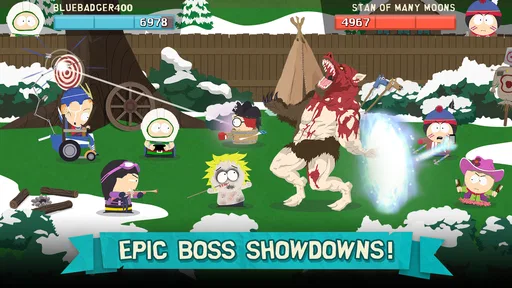
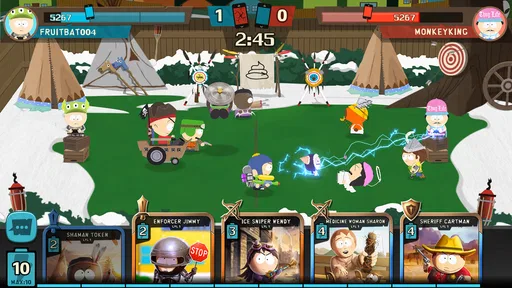

Our Review of South Park: Phone Destroyer™
 Analysis by Appyee
South Park: Phone Destroyer™ is the kind of strategy game that makes a strong first impression because it combines quick card battles with the series’ deliberately rude comedy. I found it easy to start, easy to understand, and surprisingly demanding once I stopped treating each match as a simple race to deploy units. The basic appeal is immediate: build a deck, place cards during a duel, manage energy, and try to break through the opposing side before your own defenses collapse.
That accessibility is important because this is not a slow, abstract strategy title. It is a mobile game designed around short sessions, but it still asks you to make meaningful choices. The South Park setting gives every match a distinctive personality, while the card format provides the familiar satisfaction of improving a collection and adjusting a deck. My bigger question after the novelty wore off was whether the game could become a regular habit rather than something I opened only when I wanted a quick laugh.
Why the first week works so well
The opening hours are carried by a useful mix of humor, progression, and manageable battles. You are not asked to understand a huge rulebook before playing. Instead, the game introduces its card-dueling rhythm through practical experience: choose a unit, watch how it behaves, protect vulnerable attackers, and learn when saving energy is more valuable than filling the field immediately.
That last point is where the strategy starts to reveal itself. A cheap unit can distract an enemy, but spending too much too early may leave you unable to answer the next threat. A stronger card may win an exchange, yet using it without support can waste its advantage. I quickly learned that simply dropping the most powerful available card was often less effective than building a small sequence of plays around positioning and timing.
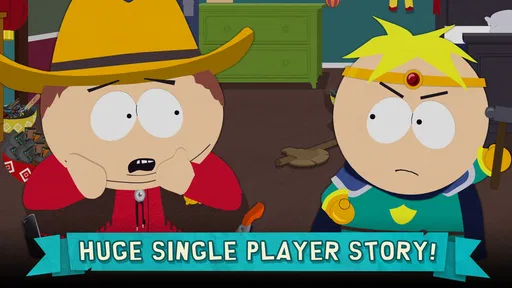
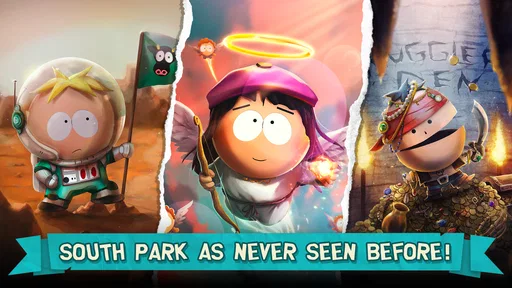
The South Park identity also does more work than a decorative theme. The characters, dialogue, and situations give the campaign a reason to keep moving forward, especially if you already enjoy the show’s crude and irreverent style. The mature 17+ rating matters here: this is not a family-friendly cartoon strategy game, and the jokes can be intentionally offensive. I would not recommend handing it to a younger player just because the visuals look animated.
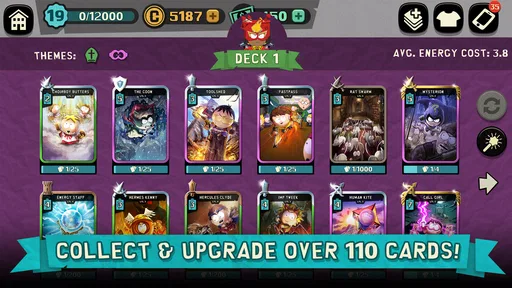
During the first week, the collection loop is especially motivating. Unlocking or improving cards creates a clear reason to return, and experimenting with different combinations prevents the early matches from feeling identical. I enjoyed trying a deck that looked strong on paper, discovering its weaknesses, and then rebuilding it around a more reliable plan rather than chasing a single flashy card.
The game is free to start, which makes trying it straightforward. It also includes in-app purchases ranging from $0.99 to $49.99 per item. I could enjoy the early experience without immediately paying, but the presence of purchases changes how I evaluate progression. Anyone who dislikes collectible-card economies should decide early whether they can treat optional spending as a strict boundary, because the temptation is part of the design.
The small decisions that separate winning decks from noisy ones
One of the most useful lessons is to judge cards by the job they perform, not only by their apparent strength. A deck needs ways to pressure the opponent, absorb damage, and respond when the first plan fails. If every card is expensive or aimed at the same kind of attack, a bad opening hand can make the match feel lost before the interesting decisions begin.
I also found it helpful to test a new deck for several matches before changing it again. Losing once does not prove that a card is useless; sometimes the problem is a poor opening sequence or an awkward matchup. On the other hand, repeatedly forcing a card into situations where it cannot contribute is a sign that the deck needs a different role, not merely more upgrades.
Another practical habit is to watch what the opponent is waiting to do. In a fast duel, it is easy to focus entirely on your own side of the field. Holding enough energy to answer a likely counterattack can be more valuable than adding one extra attacker. This makes the game feel closer to a conversation than a simple exchange of damage.
How it fits into an ordinary day
I can see this working well in a short break between errands, during a commute, or after finishing a task when I want something interactive but do not want to begin a long console session. A match can provide a clear beginning and end, and the deck-building layer gives the session a little more purpose than an isolated arcade round.
The catch is that “short session” does not always mean “one match.” Progression goals and the desire to recover from a loss can easily turn a quick check-in into a longer visit. That is not automatically a problem, but it means the game is better for people who enjoy stopping at a natural point rather than those who need a completely frictionless two-minute distraction.
For a South Park fan, the first-week appeal is stronger than it would be for someone who sees the license as irrelevant. The comedy gives the campaign flavor and makes the early unlocks more memorable. For a player who wants a purely competitive card game, the humor may eventually feel like a layer between them and the mechanics.
What remains after the novelty fades
The long-term value depends on whether you enjoy refining a deck as much as collecting cards. The initial surprise of seeing familiar characters in a mobile battle is not enough to sustain months of play by itself. What kept me interested was the small strategic puzzle of improving consistency: reducing weak draws, finding better answers to common threats, and learning which cards actually fit my preferred pace.
The game’s average rating is 4.6 from around 654 thousand ratings, and it has passed 10 million installs. Those figures suggest that the combination of licensed comedy and card strategy has reached a substantial audience, but popularity does not remove the need to ask whether the routine suits you. A large player base can make a game feel active and relevant, yet personal enjoyment still comes down to how much you like repeated competitive matches.
Month to month, the strongest reason to return is mastery. You begin to recognize patterns: when an opponent is overcommitting, when a defensive response is being held back, and when a seemingly safe push could expose your own side. The game rewards attention more than random card placement, which gives experienced play a satisfying edge over casual button pressing.
There is also value in maintaining a small group of dependable decks instead of constantly rebuilding everything. I prefer having one familiar setup for learning matchups and another for experimenting. That approach makes losses more informative because I know whether the issue came from my decisions or from a deliberately untested deck.
Progression is motivating, but it can become a routine
Collectible progression has a useful psychological rhythm: improve something, try it in battle, notice a new weakness, and return to the collection. Early on, each step feels meaningful. Later, the same loop can become maintenance work if upgrades arrive more slowly or if the player feels pushed to chase improvements simply to remain comfortable.
This is where spending discipline matters. I would recommend deciding before playing whether you are comfortable paying for convenience, experimentation, or faster progress. Buying something may make a particular stretch easier, but it does not replace learning how your cards interact. The game remains more satisfying when purchases support a plan rather than become a response to every frustrating loss.
Players who enjoy free-to-play games as occasional hobbies may find the balance manageable. Players who want a completely even-feeling progression path with no pressure to consider purchases may prefer a premium strategy game instead. That alternative usually offers less collection anxiety, even if it lacks the South Park personality and competitive card loop.
The maintenance burden of keeping the game enjoyable
The main maintenance task is not technical; it is mental. You need to keep track of what your deck is trying to accomplish and resist filling it with cards simply because they are new or familiar. A few minutes spent reviewing recent losses can be more useful than repeatedly entering another match with the same imbalance.
I also recommend avoiding constant deck changes after every defeat. That habit makes it difficult to learn anything. Change one or two pieces, play enough matches to see whether the adjustment helps, and only then make a larger revision. This turns the collection system into a practical testing ground instead of a pile of options that creates indecision.
The current version is 5.4.2, and the game supports devices running Android 7.0 or later. That makes the basic compatibility requirement relatively approachable for older Android users, although the experience will still depend on how comfortably the device handles the game. I would check the store page on the specific phone before committing to it, particularly if the device is old or storage is limited.
Another maintenance issue is attention. Because matches are competitive and progression is always visible, the game can encourage one-more-round behavior. I found it healthier to set a stopping point before starting rather than waiting until I felt annoyed. That simple boundary protects the enjoyable part of the routine and prevents the game from becoming a reflexive time sink.
Where fatigue begins
The biggest source of fatigue is repetition. The core duel is engaging, but the same basic structure can feel familiar once the surprise of the license disappears. If you need constant mechanical variety, a broader strategy game with campaigns, puzzles, or several distinct modes may hold your attention longer.
Losses can also feel more tiring when they appear to come from collection strength rather than decision quality. Even when a match is technically winnable, being outmatched in upgrades can make experimentation feel risky. That is a common tension in card-based mobile games: collecting is part of the fun, but collection gaps can affect how freely you can explore.
The humor is another possible dividing line. I appreciated that the game does not try to make South Park polite, but the same material can become exhausting if you are not already comfortable with the show’s style. Someone looking for a calm, family-oriented strategy experience should skip this one despite its colorful presentation.
There is also a difference between liking strategy and liking competitive card strategy. If your ideal game is a thoughtful city builder, a turn-based campaign, or a deep tactics title with long planning phases, this may feel too immediate and too dependent on a living collection. Its decisions matter, but they happen inside a brisk, confrontational format.
Who should install it, and who should choose something else?
I would recommend it to South Park viewers who enjoy testing themselves in short battles, especially those who like building around roles rather than collecting without a plan. It is also a reasonable choice for mobile players who want a strategy game that can be understood quickly but still rewards better timing and deck discipline.
I would be more cautious about recommending it to anyone sensitive to mature comedy, anyone seeking a one-time offline-style purchase, or anyone who dislikes the possibility of spending money in a free-to-play collection game. Those players may have a better experience with a premium tactics title or a less personality-driven card game where progression feels more predictable.
The developer is Ubisoft Entertainment, and the game has the polish and recognizable presentation I would expect from a major publisher working with a well-known entertainment property. Still, polish cannot solve the central question of repetition. If you do not enjoy the match-to-match decisions, the license will not provide enough lasting value on its own.
My long-term verdict
After the first-week excitement, South Park: Phone Destroyer™ earns continued space on my device only when I approach it as a focused deck-building hobby rather than an endless source of new jokes. Its best qualities are the fast learning curve, the satisfying tension between spending energy now and saving it for a response, and the way the South Park cast gives otherwise familiar card battles a distinct voice.
Its weaknesses become clearer with regular play. Repetition can set in, progression may make some experimentation feel less comfortable, and the free-to-play purchase range can be a real concern for people who want a clean, fixed-cost experience. The mature tone also narrows its audience more than the cartoon visuals might suggest.
My honest recommendation is to treat it as a controlled, recurring pastime rather than a game that must occupy every spare moment. Set a spending limit, keep a couple of purposeful decks, review losses instead of reacting to them, and stop when the matches begin to feel like chores. Used that way, it has enough strategic texture to remain worthwhile beyond the novelty. If you want a deeper, quieter, or more self-contained strategy experience, another game will probably serve you better.
Privacy and Permissions
See what permissions an app requests and how it handles your data.
- Wi-Fi connection information
- view Wi-Fi connections
- Other
- view network connections, full network access, control vibration, prevent device from sleeping, Google Play license check
Verdict
Strengths of South Park: Phone Destroyer™
- Combines collectible cards with real-time tactical combat.
- Features familiar characters, locations, and humor from the TV series.
- Short matches make it easy to play during quick breaks.
- Offers multiple card classes for varied deck-building strategies.
- Includes both solo missions and competitive multiplayer battles.
Limitations of South Park: Phone Destroyer™
- Progression can feel slow without spending money on card upgrades.
- Online matchmaking may pair unevenly powered decks.
- Frequent battles can become repetitive after extended play.
- Some jokes and themes may be unsuitable for younger players.
- Requires a stable internet connection for most gameplay features.
Other Releases by Ubisoft Entertainment
View All
Hungry Shark Evolution
Arcade4.5

Hungry Shark World
Arcade4.7

Just Dance Now
Music3.8

Hungry Dragon: by Hungry Shark
Arcade4.5
Similar Picks in This Category
View All
Clash of Clans
Supercell4.5

Plants vs. Zombies™
ELECTRONIC ARTS3.7

Lords Mobile: Kingdom Wars
IGG.COM4.5

Clash Royale
Supercell4.4

State.io — Conquer the World
CASUAL AZUR GAMES4.1

Car Driving School : Car Games
Spark Game Studios3.9
Frequently Asked Questions
What is South Park: Phone Destroyer™?
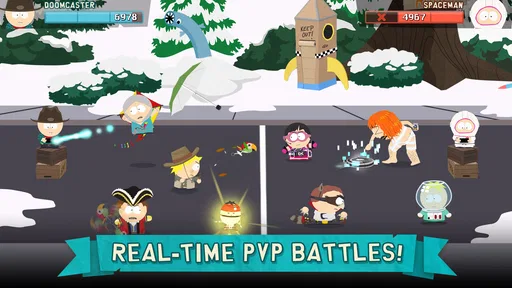
South Park: Phone Destroyer™ is a free-to-play mobile strategy and card-battling game based on the South Park animated series. You collect character cards, build a combat deck, and fight through real-time battles using familiar characters and humorous abilities. The game combines single-player missions with competitive multiplayer, while keeping the show’s irreverent writing, cartoon visuals, and distinctive voice acting.
Is South Park: Phone Destroyer™ free to download and play?
Yes, South Park: Phone Destroyer™ can be downloaded for free on supported Android and iOS devices. However, it uses optional in-app purchases for card packs, resources, and other progression-related items. You can play without spending money, but advancing your collection and upgrading cards may take more time. Parents should also review device purchase settings before allowing children to play.
Does the game require an internet connection?
An internet connection is generally required to play South Park: Phone Destroyer™, particularly for multiplayer matches, account synchronization, events, and access to online content. This means it is not designed as a fully offline game. A stable Wi-Fi or mobile data connection is recommended, since interruptions during competitive battles may affect the experience and could potentially count as a lost match.
Is South Park: Phone Destroyer™ suitable for children?
Despite its simple controls and collectible-card format, South Park: Phone Destroyer™ is primarily aimed at mature audiences. It includes the series’ crude humor, profanity, violence, suggestive jokes, and other adult themes. The game also contains competitive features and optional purchases. Parents should check the official age rating in their region and consider using parental controls before downloading it for younger players.
How does progression and multiplayer work in South Park: Phone Destroyer™?
Progression involves completing story missions, earning rewards, collecting new cards, and upgrading units to create stronger decks. Battles are played in real time, with players deploying characters and managing energy while trying to destroy the opponent’s defenses. Multiplayer can become increasingly competitive as card levels and deck choices matter, so free players may need patience and careful resource management to remain successful.
Play our best games!


